Executive Summary
This paper defines a practical architecture for cross-app intelligence where one communication cycle controls authoring, execution, verification, and reuse across browser PWAs and quantum backends.
|ψout⟩ = (E ∘ R ∘ D ∘ T)(|ψin⟩), T=Detect, D=Decode, R=Render, E=Enhance
Pipeline State Evolution · Use chart lane only when stage timing/fidelity deltas change; otherwise equation-only review is sufficient.
What A Reviewer Sees Fast
- Core thesis: macro orchestration (Μ) emerges from coordinated micro operators (μ) across a repeatable Detect → Decode → Render → Enhance cycle.
- Production path: overclocked local source → prefix/gutter + steno + `.qbit` encode → preflight constraints → QPU dispatch → validation → memory reinjection.
- Robustness claim: round-trip fidelity and formatter-safe strip/reinject provide durable artifact integrity and reproducible handoffs.
- Operational value: faster iteration, clearer traceability, and lower deployment ambiguity for research-to-runtime workflows.
Communication Cycle Diagram
flowchart LR
A[Authoring / Intent] --> B[Iron Line L0-L7]
B --> C[DAC Tracks + Stripes]
C --> D[Quantum Gutter + Prefixes]
D --> E[.qbit Robust Encode]
E --> F[Retrieval + Memory Reinjection]
F --> A
Authoring / Intent
- Input
- Prompt + corpus + Contrails cues
- Target
- <100ms intent normalization
- Output
- Structured run payload
Iron Line L0-L7
- Input
- Run payload + layer map
- Target
- 24ms cortical budget routing
- Output
- Deterministic stage ownership
DAC Tracks + Stripes
- Input
- Source lines + language profile
- Target
- Stable structural telemetry + sorting keys
- Output
- Track depth, stripe tokens, complexity hotspots
Steno Transport
- Input
- DAC signal + code stream
- Target
- Invisible metadata retention
- Output
- `strip` / `pajamas` / `noBLINK` payload
Quantum Gutter + Prefixes
- Input
- Normalized source + DAC context
- Target
- 11-symbol per-line semantic coverage
- Output
- Prefix coordinates + gate-mapped lines
.qbit Robust Encode
- Input
- Prefixed + steno stream
- Target
- Round-trip-safe artifact
- Output
- Portable `.qbit` package
Preflight Constraints
- Input
- Candidate circuit / runtime job
- Target
- Sub-3% submit failure risk
- Output
- GO / WARN / ABORT verdict
QPU Dispatch
- Input
- Preflight-approved payload
- Target
- Queue-safe execution
- Output
- Job ID + backend handle
Result Validation
- Input
- Raw execution results
- Target
- Trustworthy post-run quality
- Output
- Validated result packet
Retrieval + Memory Reinjection
- Input
- Validated packet + corpus memory
- Target
- Higher retrieval precision
- Output
- Updated memory state
Next Iteration
- Input
- Updated memory + operator intent
- Target
- Lower edit-to-dispatch time
- Output
- Iteration n+1 start state
Capture + Route
01 Intent Capture
- IN
- Prompt + context corpus
- TG
- <100ms intent normalize
- OUT
- Structured run payload
02 Layer Routing
- IN
- Run payload + stage map
- TG
- Deterministic layer route
- OUT
- Stage ownership envelope
Structure Core
03 DAC Tracks + Stripes (Core)
- IN
- Source lines + language
- TG
- Sortable structural telemetry
- OUT
- Track/stripe annotations
- KEY
- `sym` `gate` `depth` `category` `track` `tokenType` `lineIndex` `contextScore`
04 Steno Transport
- IN
- DAC signal + code stream
- TG
- Invisible metadata retention
- OUT
- Steno-encoded payload
05 Quantum Gutter + Prefixes (Core)
- IN
- Normalized source + DAC context
- TG
- 11-symbol per-line coverage
- OUT
- Line-level semantic coordinates
- KEY
- `prefixSym` `cls` `gate` `lineCoverage` `confidence` `language`
Artifact + Runtime
06 `.qbit` Encode
- IN
- Prefixed + steno stream
- TG
- Round-trip fidelity near 1.0
- OUT
- Portable `.qbit` artifact
07 Preflight
- IN
- Candidate circuit / job
- TG
- Sub-3% submit failure
- OUT
- GO / WARN / ABORT verdict
08 QPU Dispatch
- IN
- Preflight-approved payload
- TG
- Queue-safe execution
- OUT
- Job ID + backend handle
09 Validation
- IN
- Raw execution results
- TG
- Post-run quality integrity
- OUT
- Validated result packet
Memory + Iterate
10 Memory Reinjection
- IN
- Validated packet + corpus
- TG
- Higher retrieval precision
- OUT
- Updated memory state
11 Iteration n+1
- IN
- Updated memory + intent
- TG
- Lower edit-to-dispatch time
- OUT
- Iteration n+1 start state
Model Trace-Through Audit
A1 Runtime Classification + Routing
- TASK
- Prefix classify + stage routing per line/event
- MODEL
- T5-native prefix engine (Rust) + DAC heuristics
- WHY
- Deterministic low-latency path for L0-L4 loops
- RISK
- Confidence misses on ambiguous mixed-language lines
- GATE
- TensorHead reroute + Qw threshold + line coverage check
A2 Authoring + Build Support
- TASK
- Draft/rewrite specs, explain flows, generate code deltas
- MODEL
- GPT-5.3 Codex coding agent
- WHY
- Reliable multi-file edits with strict scope control
- RISK
- Scope drift or descriptor-equation mismatch
- GATE
- DOM-path checkpoints + row equation audit + lint pass
A3 Retrieval + Memory Reinjection
- TASK
- Rank context and reinject state into next iteration
- MODEL
- BM25 + vector cosine + rerank + time weighting
- WHY
- Balances lexical precision with semantic continuity
- RISK
- Stale memory overweighting or recency bias under stress
- GATE
- Score breakdown inspection + freshness weight + validation packet check
The core contribution is not a standalone feature set, but an integrated control plane: Iron Line L0-L7 for deterministic stage ownership, DAC tracks and stripes for structural observability, and a steno transport layer (`strip`, `pajamas`, `noBLINK`) that preserves timing-critical metadata while keeping developer ergonomics intact. On top of this foundation, the quantum gutter and 11-symbol prefix coordinates provide line-level semantic traceability, while the new `.qbit` codec contributes robustness as a fault-tolerant interchange layer with round-trip-safe encoding, formatter-aware strip/reinject handling, and reproducible decode paths for long-horizon archives and multi-client sync. The ugrad build path operationalizes these abstractions into a measurable pipeline from overclocked local base code to QPU-ready artifacts through preflight checks, backend-constrained dispatch, result validation, and memory reinjection. A second innovation axis is the Contrails keyboard advancement, which turns symbolic concept lanes into an accessible human input protocol for faster intent capture, lower operator cognitive load, and cleaner alignment between keystroke semantics, prefix coordinates, and downstream quantum/runtime transformations. In grant terms, the novelty is the closed-loop linkage of symbolic reasoning, retrieval-memory continuity, resilient codec transport, and production deployment in one reproducible surface, with clear translational value for research velocity, verification rigor, and cross-platform reliability across ugrad.ai and qbitos.ai.
Canonical Macro/Micro State Equation
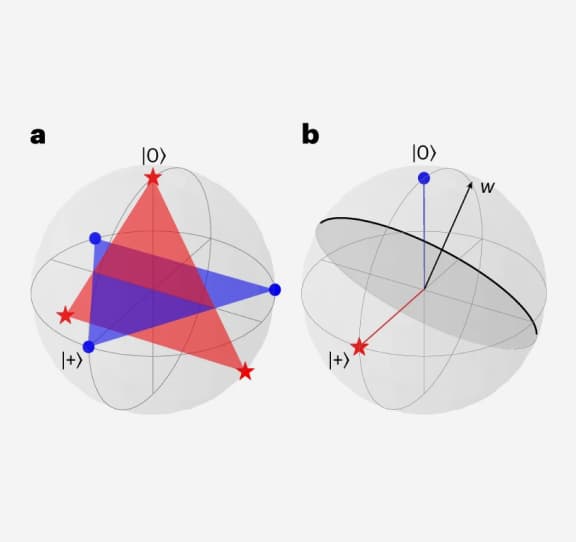
Question: Do local μ operations combine into a stable global Μ state?
Metric definition: coherence=.87, operator stability=.82, aggregate output confidence=.89 (0–1 scale).
Decision gate: if coherence < .80, hold dispatch and rerun operator weighting before cycle advance.
Operational Walkthrough: Canonical Macro/Micro State Equation
- Macro state (Μ): orchestrates global routing, memory continuity, and policy gates across Iron Line layers.
- Micro operators (μi): per-line transforms carry prefix, depth, context, and semantic signal into execution.
- Runtime mapping: `U(Pi, di, ci, si)` maps directly to DAC + Prefixes + Quantum Gutter fields.
- Product effect: one equation tracks authoring intent through `.qbit` transport into reproducible runtime behavior.
1. Core Model (Μμ)
Uppercase Mu (Μ) represents macro manifold behavior: global orchestration, routing, memory continuity, and multimodal scoring. Lowercase mu (μ) represents local operators: per-line transforms, confidence reroutes, transport decisions, and cue alignment. This split makes system-level reasoning and implementation-level behavior simultaneously auditable.
System Aggregation (Μ over Σμ)
Question: Is system aggregation fast and correct under load?
Metric definition: event-fusion latency=34ms, stage assignment accuracy=97.2%.
Decision gate: if latency > 50ms or accuracy < 95%, fallback to conservative routing profile.
Operational Walkthrough: System Aggregation (Μ over Σμ)
- Aggregation rule: each line/event micro-operation contributes to a single auditable macro system state.
- Field stitching: line index + event payload + DAC track context fold into shared run identity and trace.
- Control use: drives stage ownership, dispatch order, and memory update priority under load.
- Product effect: keeps terminal-core behavior interpretable when parallel actions increase project stress.
2. Derived Equation Stack - Canonical Set
Pipeline State Evolution
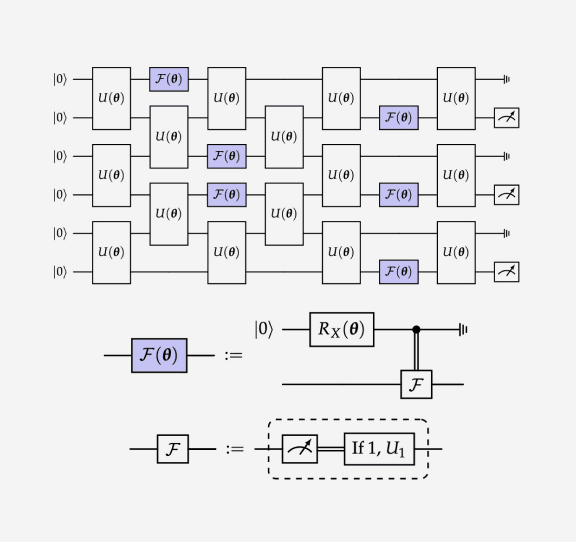
Question: Where does cycle time concentrate in T→D→R→E?
Metric definition: T=42ms, D=31ms, R=18ms, E=24ms (total 115ms).
Decision gate: if total > 140ms, optimize top-two contributors first (currently T and D).
Operational Walkthrough: Pipeline State Evolution (Detect → Decode → Render → Enhance)
- Detect (T): capture source intent and runtime context from `uterm`, `quantum-notepad`, and commander input channels.
- Decode (D): classify/parse lines into structural coordinates via prefix + DAC paths before any export or dispatch.
- Render (R): materialize UI/state outputs (cards, traces, charts, terminal output) for operator review.
- Enhance (E): reinject retrieval-memory and confidence feedback to improve the next operator cycle.
Adaptive Confidence with Reclassification
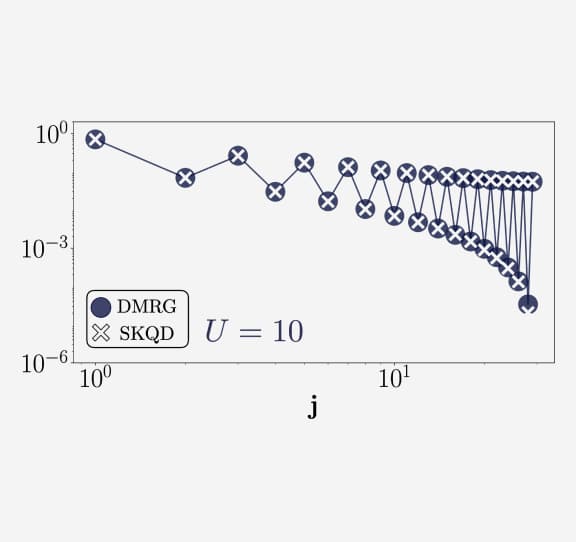
Question: Does rerouting low-confidence lines improve correctness?
Metric definition: reroute rate=7.8%, precision lift=+4.6pp, false-route=2.1%.
Decision gate: if false-route exceeds 3%, raise τ sensitivity and retune confidence thresholds.
Operational Walkthrough: Adaptive Confidence with Reclassification
- Primary pass: fast classifier resolves line/operator intent at low latency for terminal-grade responsiveness.
- Confidence gate: when probability falls below τ, payload escalates to tensor context (`TensorHead`) instead of forcing bad labels.
- Outcome: low-confidence noise is isolated and corrected without slowing high-confidence paths.
- Product effect: fewer silent misroutes in automation and safer autonomous patch generation.
Prefix-Depth-Semantic Composite
Question: Are Qw weights balanced for current workload type?
Metric definition: α=.35 β=.22 γ=.27 δ=.16; median Qw=.79.
Decision gate: if median Qw < .72, rebalance α/γ for semantic-heavy sessions.
Operational Walkthrough: Prefix-Depth-Semantic Composite (Qw)
- P (prefix): structural symbol confidence from the 11-symbol gutter system.
- D (depth): nesting/scope pressure from DAC track context to detect risky structural transitions.
- C/S (context/semantic): local and cross-line meaning weight for retrieval + runtime ranking.
- Tuning: α/β/γ/δ can be configured per app/layer to balance speed vs precision in terminal flows.
Round-Trip Fidelity
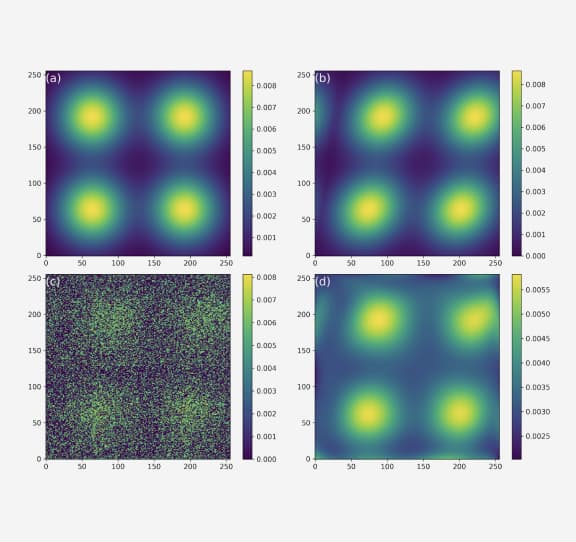
Question: Is round-trip integrity good enough for production handoff?
Metric definition: F_rt mean=.983, p95=.976, release floor=.960, breaches=1.7%.
Decision gate: if breaches exceed 3%, block export and run strip/reinject diagnostics.
Operational Walkthrough: Round-Trip Fidelity for Handoff Artifacts
- Encode/decode loop: every `.qbit` artifact can be checked against source payload before handoff.
- Metric gate: reject or warn if 𝓕rt drops below release threshold for production workflows.
- Formatter-safe path: strip/reinject is validated to keep semantic payload stable after code formatting.
- Product effect: stable archival and reproducible transport across machines/clients.
Cross-App Memory Update
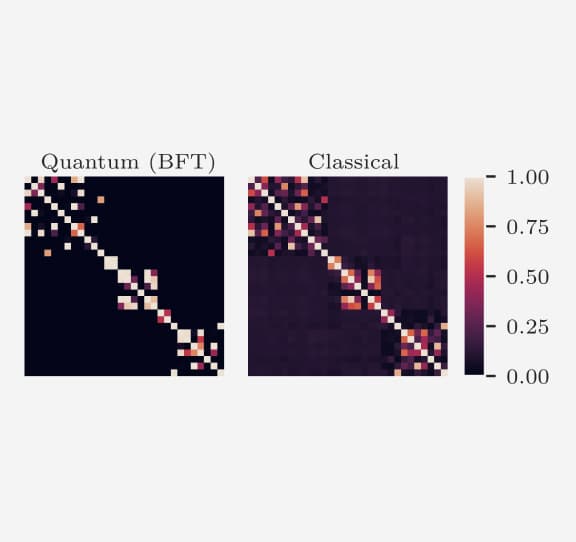
Question: Is memory improving signal without instability?
Metric definition: λ=.82, memory gain=+6.2%, variance=±3.4%.
Decision gate: if variance exceeds ±5%, lower reinjection weight and tighten freshness bias.
Operational Walkthrough: Cross-App Memory Update Rule
- State blend: previous memory and new event evidence combine using λ to avoid thrash.
- Persistence: synced through local app state + `BroadcastChannel` updates for shared context continuity.
- Usage: drives better defaults for next command, prompt expansion, and retrieval scoring.
- Stress behavior: memory smoothing reduces regression when project pressure increases.
Transport/Scrub Dynamics
Question: Are scrub interactions fast without accidental jumps?
Metric definition: v_min=.35, overshoot=0.8%, settle time=112ms median.
Decision gate: if overshoot > 2%, raise v_min or increase damping η.
Operational Walkthrough: Transport / Scrub Dynamics (Inertial Navigation)
- Velocity model: inertia + acceleration captures swipe/scroll intent in queue or timeline surfaces.
- Threshold gate: `Δidx` only steps when |v| exceeds `v_min`, preventing accidental jumps.
- UI targets: coverflow queues, run history stepping, and timeline inspection tracks.
- Product effect: smoother control at high speed without losing deterministic indexing.
Transcript-to-Media Alignment
Question: Does transcript highlighting stay time-locked to media?
Metric definition: cue delta median=42ms, p95=96ms.
Decision gate: if p95 exceeds 140ms, re-anchor cue matching cadence.
Operational Walkthrough: Transcript-to-Media Alignment
- Nearest cue: active caption/index block is selected by minimal time delta against playback clock.
- Runtime behavior: keeps transcript highlight and media state synchronized during seek/scrub.
- Targets: VTT attachment paths, narrated walkthroughs, and review timelines.
- Product effect: fast evidence lookup with less operator confusion during debug/demo sessions.
XR/Ocular Pose Projection
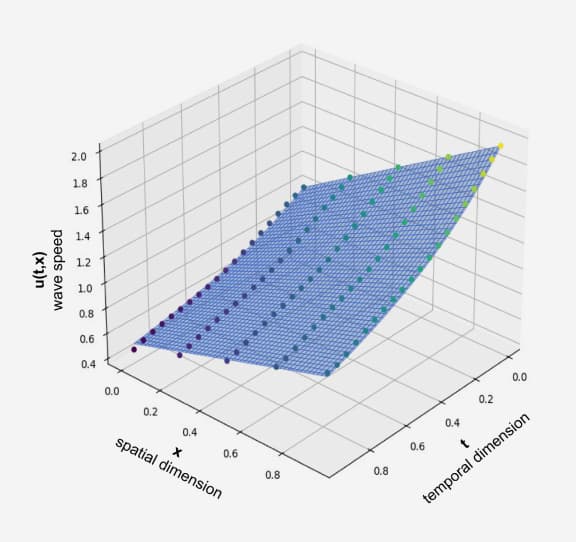
Question: Is spatial projection accurate enough for XR navigation?
Metric definition: yaw RMSE=1.9°, pitch=2.3°, roll=1.6°.
Decision gate: if any axis RMSE exceeds 3.0°, apply recalibration pass before publish.
Operational Walkthrough: XR / Ocular Pose Projection
- Rotation chain: yaw/pitch/roll transforms apply in ordered sequence for stable orientation math.
- Visual targets: point clouds, voxel fields, and sequence viewers across quantum and research views.
- Interaction: pointer/camera deltas map into pose updates for interpretable motion.
- Product effect: spatial views stay coherent while navigating dense technical state.
Multimodal Ranking
Question: Which scoring component drives ranking quality right now?
Metric definition: w_b=.28, w_v=.34, w_r=.24, w_t=.14; MRR=.78.
Decision gate: if MRR drops below .74, rebalance w_r/w_v and rerun relevance calibration.
Operational Walkthrough: Multimodal Ranking for Search + History
- Lexical signal: BM25 captures exact keyword/operator surface relevance.
- Semantic signal: embedding cosine resolves concept-level similarity beyond token overlap.
- Rerank + time: intent-aware reranker and recency weighting improve practical retrieval precision.
- Product effect: conversation context stays aligned to “work in progress” instead of stale matches.
Unified Communication Cycle Operator
Question: Does Π composition improve next-cycle performance?
Metric definition: cycle score=.88, next-iteration latency improvement=13%.
Decision gate: if improvement falls below 8%, review component weights (Qw/F_rt/M_t/R_mm).
Operational Walkthrough: Unified Communication Cycle Operator
- Composition layer: Π ties classification weight (Qw), artifact integrity (𝓕rt), memory (Mt), and retrieval (𝓡mm) into one decision surface.
- Operational loop: each iteration updates the next run state instead of treating outputs as terminal.
- Terminal-core relevance: converts math into actionable control logic for deployment and autonomous iteration.
- Scale behavior: as project stress increases, this keeps the system auditable and less error-prone.
2.1 Evidence Graphing + Benchmark Expansion
To expound the equation stack with contemporary quantum-centric evidence, this section maps each equation family to chart and graph forms used in current IBM quantum research/announcement narratives and related benchmark reporting. The intent is to make each symbol block auditable via a concrete visual method, not prose alone.
Closed-Loop Orchestration Graphs
For |ψout⟩ = (E ∘ R ∘ D ∘ T)(|ψin⟩) and 𝒞t+1 = Π(...), use linked workflow/network charts that show quantum/classical handoff, queue utilization, and loop latency across runtime nodes.
Error/Fidelity Progression Curves
For 𝓕rt, Qw(i), and confidence-reroute equations, use line/scatter/interval plots with uncertainty markers to show quality, variance, and threshold gate behavior.
Multimodal Ranking Diagnostics
For Score(d∣q), visualize contribution decomposition (BM25, vector, rerank, time) and retrieval drift over iterations to validate memory reinjection effects.
Transport + Runtime Scaling
For vt+1 and queue-step dynamics, use throughput-vs-latency charts and dimension scaling plots to expose bottlenecks under boardroom-scale workloads.
Chart Method: Candlestick-Style Bars for Equation Benchmarks
- Bar body: central estimate for each equation metric lane (e.g.,
Frt, rerank gain, dispatch latency). - Upper/lower wick: confidence interval or run-to-run spread to prevent overclaiming single-point wins.
- Side-by-side lanes: baseline vs current vs target so product/readiness deltas remain visible to reviewers.
Equation Metrics Candlestick Panel (Baseline → Current)
IBM-Linked Evidence Trail for Equation Sections
- QCSC closed-loop anchor: RIKEN + IBM Fugaku/Heron orchestration references the exact type of closed-loop control this paper formalizes.
- Networked scale-out anchor: IBM’s QNU/networked quantum roadmap aligns with the control-plane + server/MCP orchestration lane in the diagram.
- Research corpus anchor: IBM research/publication streams provide optimization, Hamiltonian, PDE, and ML graph forms for equation-to-chart traceability.
- Update lane: maintain this section as a living benchmark board tied to blog/research updates and release checkpoints.
Data provenance rule: this page treats first-party uvspeed/uterm runs as claim-bearing evidence; external company figures are context comparators only, not endorsements or performance claims.
RIKEN + IBM QCSC at scale · Networked quantum computers roadmap · IBM Quantum Blog · IBM Quantum Research
Live Equation → Figure Asset Matrix (Local Assets)
Equation Traceability Panel
Each tile binds one equation lane to a local figure asset and a validation role. Swap assets per run while preserving equation mapping IDs for audit continuity.
Link detect probing...
uTerm → Quantum Integration Readiness Gate
- Gate A (signal fidelity): `uterm` command stream exports deterministic prefix + steno traces with `F_rt` above release threshold.
- Gate B (dispatch safety): `.qbit` artifacts pass preflight GO/WARN policy and backend compatibility checks before QPU queueing.
- Gate C (closed-loop memory): memory reinjection and retrieval score deltas are measured per iteration and attached to the equation matrix row IDs.
- Gate D (boardroom evidence): each milestone review includes updated local figure assets, candlestick metric bars, and run metadata for reproducibility.
3. Deployment Pattern for .qhtml
The landing is intentionally structured as a publication-grade PWA document: semantic sections, dense typography, justified narrative blocks, and a sticky expansion rail that keeps technical context available while reading. This supports desktop and mobile reading, and mirrors cleanly into launch announcements without layout drift.
3.1 Quantum Race Dynamics
The visual transport layer follows a race-wave interpretation of the communication cycle: Bloch-field coherence, torn-mesh constraints, and dot-flow sampling evolve together under one shared waveform. This mirrors the system objective where macro state (Μ) is not isolated from local operators (μ); instead, all lanes update from the same cycle clock, making phase drift, queue transitions, and retrieval-memory reinjection observable as one coupled dynamic rather than separate effects.
4. Publication + Distribution Targets
For final output, treat publication as a two-track release: (A) peer-reviewed research visibility, and (B) production-grade software distribution with explicit licensing and citation metadata.
Target checklist for manuscript scope fit, initial formatting, editorial process, ORCID linkage, and production readiness.
Primary preprint layer for fast disclosure, timestamping, and community feedback.
Peer-reviewed venue for quantum algorithms, systems framing, and reproducible methods.
Top-tier quantum publication channel for higher-impact manuscript versions.
High-visibility journal track when framing cross-disciplinary technical contribution.
Applied quantum engineering and implementation-focused publication positioning.
Industry-aligned benchmark and partnership context for practical utility narratives.
Closed-loop quantum/HPC orchestration milestone used here as a benchmark narrative for cycle equations.
QNU and quantum-network scale strategy reference for control-plane/server orchestration lanes.
Rolling announcement feed for graphing comparators, advantage claims, and benchmark updates.
JavaScript package distribution target for browser/Node modules and SDK surface.
Python package distribution target for research tooling, automation, and CLI workflows.
Rust package distribution target for high-performance engine and systems components.
Immutable DOI for code/data snapshots tied to publication submissions and revisions.
Canonical license naming for Apache-2.0/MIT/etc. and unambiguous downstream reuse.
Narrative benchmark for broad-audience explainability after technical release.
Coverage: Config + Plugin + Rules + Artifacts + Codec
- Config: publish versioned runtime/build config with reproducible defaults (`pyproject.toml`, lockfiles, model/provider matrix).
- Plugin + MCP: release plugin manifest, tool schema inventory, and capability guardrails with compatibility notes.
- Rulesets: include machine-readable policy/rules docs for safety, formatting scope, and deployment constraints.
- Artifacts: ship signed release artifacts with checksums, changelog, and DOI snapshot mapping.
- Codec specifics: document `.qbit` encode/decode mode, strip/reinject behavior, round-trip tests, and schema versioning.
Journal + Product Readiness Metrics (Live)
- Current state: page/readability + contribution framing ≈ 85%; manuscript package readiness ≈ 60–70%.
- Gap to submission: convert this launch paper into manuscript form (Abstract, Intro, Related Work, Methods, Experiments, Results, Limitations).
- Evidence gates: benchmark protocol, datasets/traces, hardware table, statistical reporting, claim→figure/table map.
- Policy gates: ORCID-linked authors, disclosures, cover letter, and venue-specific formatting checks.
Rough Timeline (Boardroom Demo → Journal Submission)
- Weeks 0–2: lock baseline metrics and reproducibility harness (`F_rt`, latency, failure-rate, memory precision).
- Weeks 2–6: run structured experiments across L0–L7 flows and finalize figures/tables for executive + reviewer audiences.
- Weeks 6–10: draft manuscript + supplement package, complete metadata/policy checks, prepare preprint and journal submission files.
- Weeks 10–12: submit preprint, start journal submission cycle, and align boardroom narrative to measured deltas.
Industry QPU Comparison Board (Continuous Update Lane)
- Comparator set: IBM, Quantinuum, IonQ, Rigetti, D-Wave, Xanadu, QuEra, Pasqal, IQM, PsiQuantum, Atom Computing, OQC, Alice & Bob, Haiqu-linked claims.
- Track per company: hardware modality, public qubit scale, error/fidelity disclosures, runtime claims, SDK maturity, and publication cadence.
- Scoring model: normalize to common gates: utility evidence, reproducibility quality, deployment readiness, and partner validation.
- IBM lane anchor: use IBM Quantum research/publications and platform benchmark context as baseline reference for external parity checks.
Prepared as a launch-grade research landing surface for immediate deployment on ugrad.ai and mirrored “launching soon” distribution on qbitos.ai.